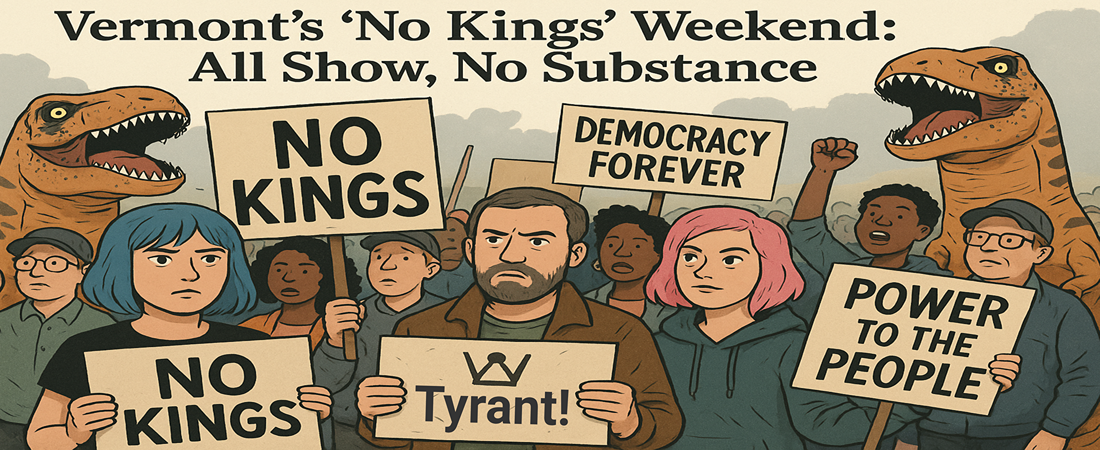
Over the weekend, Vermont joined the nationwide “No Kings” protests — rallies supposedly aimed at resisting authoritarianism and “executive overreach.” According to an article from VTDigger, more than 40 events were held across the state. Burlington hosted one of the largest gatherings, with organizers claiming “more than 16,000” attendees, says VTDigger. The turnout was impressive — but the message behind the movement was confused, exaggerated, and ultimately self-defeating.
The premise of the “No Kings” campaign is that the United States is sliding toward monarchy — that citizens must rise up to stop a supposed “king” from consolidating power. It’s a dramatic story, but also a ridiculous one. The U.S. doesn’t have kings, and it never has. The system of checks and balances still stands, elections still occur, and even the most controversial presidents face constant oversight from Congress, the courts, and a relentless media. The notion that a single elected official could simply crown himself monarch belongs more to bad political theater than to reality.
This detachment from reality was the hallmark of Vermont’s weekend protests. The rallies tried to mix everything — immigration, LGBTQ+ rights, education funding, climate change, Palestine solidarity, and opposition to Trump — into one catch-all spectacle. That might sound inclusive, but it’s also incoherent. As VTDigger reported, protesters came to oppose “the Trump administration’s targeting of immigrants, LGBTQ+ rights, public education, the government shutdown and more.” When a movement claims to stand for everything, it quickly stands for nothing in particular. Without a single clear goal or measurable demand, these rallies risk becoming emotional gatherings rather than engines for change.
Adding to the confusion was the atmosphere itself. The Burlington rally featured a “die-in,” costumed marchers, and even inflatable dinosaur suits — one participant told Seven Days VT she wore hers because “humor and silliness seem to be really effective against this administration.” That may sound whimsical, but it highlights the problem perfectly: the protests felt more like a street fair than a serious defense of democracy. Turning civic engagement into cosplay might earn applause on social media, but it doesn’t persuade skeptics or win elections.
Meanwhile, even sympathetic coverage acknowledged the steep costs of these events. “Vermont’s big protests come with big price tags,” says VTDigger, noting the taxpayer burden of logistics, security, and cleanup. If a protest movement burns through public resources yet produces no legislative results or clear outcomes, it starts to look more self-indulgent than civic-minded. Vermont prides itself on practicality — and these demonstrations were anything but.
The irony is that the state that gave the country thoughtful, small-town democracy spent a weekend reenacting a fantasy rebellion against imaginary kings. The real challenges facing Vermonters — affordability, rural decline, taxes, infrastructure, and healthcare access — were nowhere in sight. Instead, activists shouted slogans about royalty that never existed, confident that their noise alone meant progress.
In the end, the “No Kings” weekend was loud but empty, dramatic but directionless. It reflected a larger trend in modern protest culture: mistaking emotion for action and performance for progress. If Vermont’s activists truly want to defend democracy, they might start by grounding their efforts in facts and truth, focusing their goals, and remembering that substance — not spectacle — is what actually changes a nation.
— Benjamin Cross